
Intro
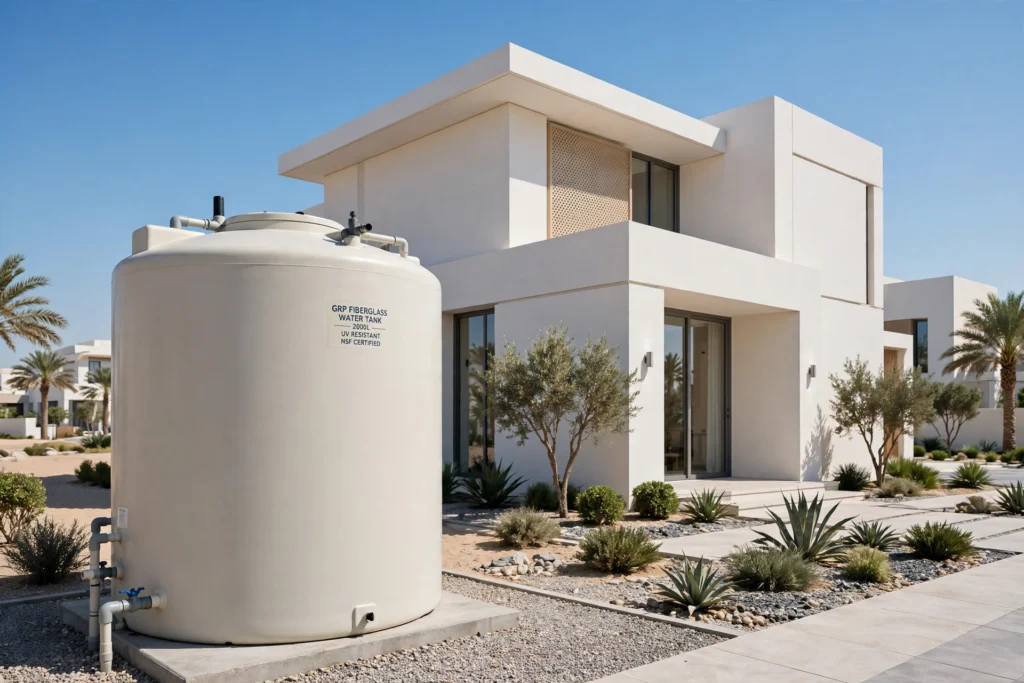
A GRP water tank is built to handle the UAE climate — heat, dust, and long storage periods included. But “low maintenance” does not mean “no maintenance.” A small yearly routine keeps the water fresh, protects the tank, and helps it serve your villa or building for many years.
This guide covers exactly that routine: one proper clean per year, one quick check per month, and the warning signs that mean you should act sooner.
Why GRP Tanks Are Easy to Maintain
GRP — glass-reinforced plastic, usually called fiberglass — is a popular tank material in the UAE for good reasons. Its smooth inner surface does not rust, does not flake, and gives sediment and algae very little to grip onto. That means cleaning is mostly about removing what settles at the bottom and keeping the lid, inlet, and fittings in good order — not fighting corrosion.
A well-maintained GRP fiberglass water tank stays hygienic for potable water storage and keeps its strength for years. The routine below is written for a standard household or building tank. If your tank supplies drinking water, keep the cleaning steps gentle and food-safe throughout.
Your Yearly Cleaning Routine, Step by Step
Plan the clean for a cooler morning and allow a few hours. You will need a soft brush or sponge, clean water, a food-safe disinfectant suitable for drinking-water tanks, gloves, and a way to drain the tank safely.
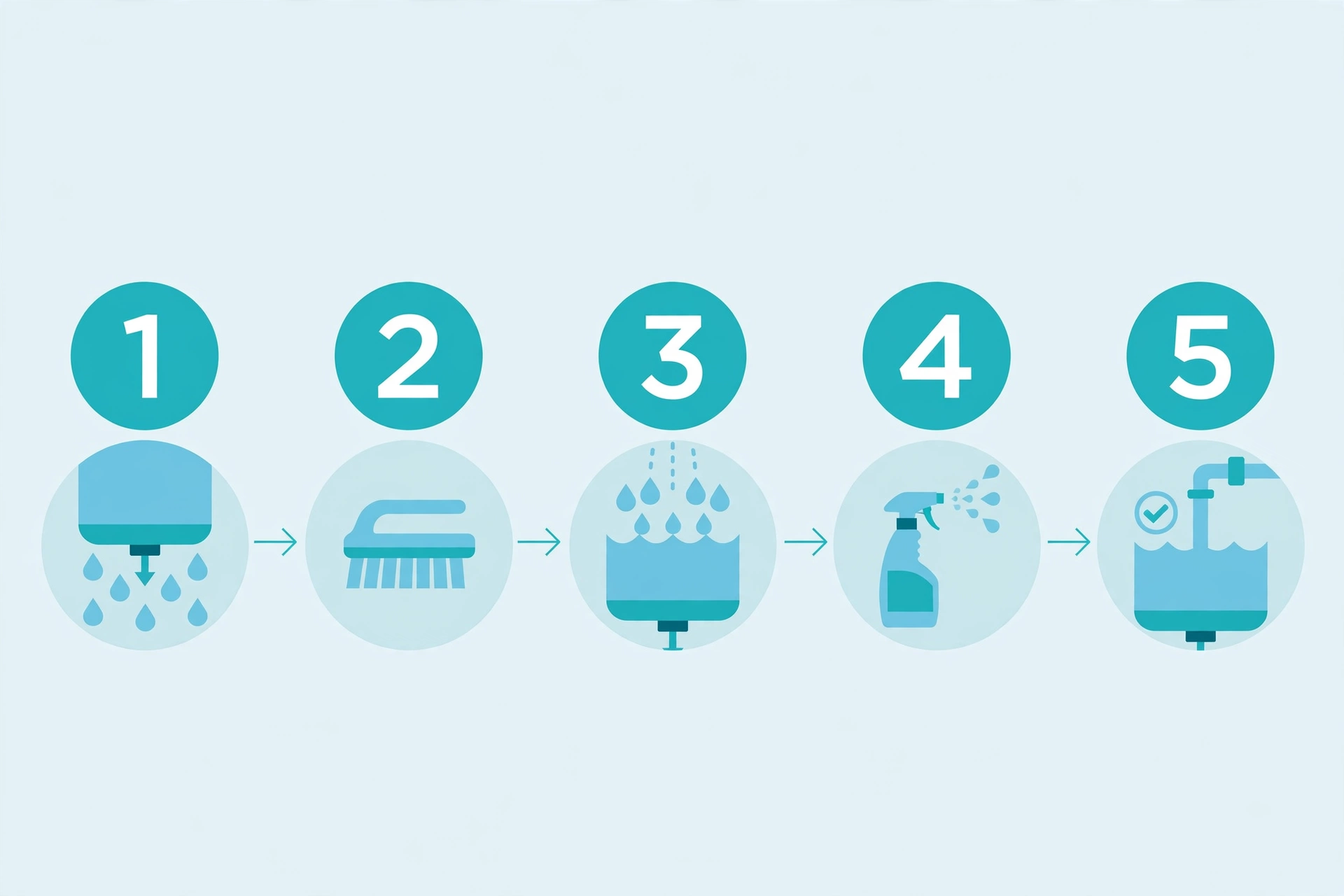
Step 1 — Isolate and drain. Turn off the inlet supply and the outlet to the building. Drain the tank through its outlet or drain valve. Direct the drained water to a suitable drainage point, never toward a septic system or a neighbour’s property.
Step 2 — Scrub gently. With the tank empty, brush the walls and floor with a soft brush or sponge. Work from the top down so loosened sediment falls to the floor. Do not use wire brushes, sharp scrapers, or harsh solvents — they can scratch the fiberglass surface.
Step 3 — Remove sediment and rinse. Scoop out settled sediment and rinse the interior thoroughly with clean water until the rinse water runs clear. Check the corners and around fittings, where sediment likes to collect.
Step 4 — Disinfect. Apply a food-safe disinfectant made for drinking-water tanks, following the product’s own instructions and contact time exactly. Then rinse again until no disinfectant smell remains. If you are unsure about a product, choose the mildest food-safe option and rinse twice.
Step 5 — Refill and check. Close the drain, refill the tank, and check every fitting, joint, and valve for drips while the tank fills. Check the lid seal last — a clean tank with a poorly sealed lid will collect dust again within weeks.
The 5-Minute Monthly Check
Between yearly cleans, a quick monthly look catches small problems before they grow. Walk around the tank and check five things:
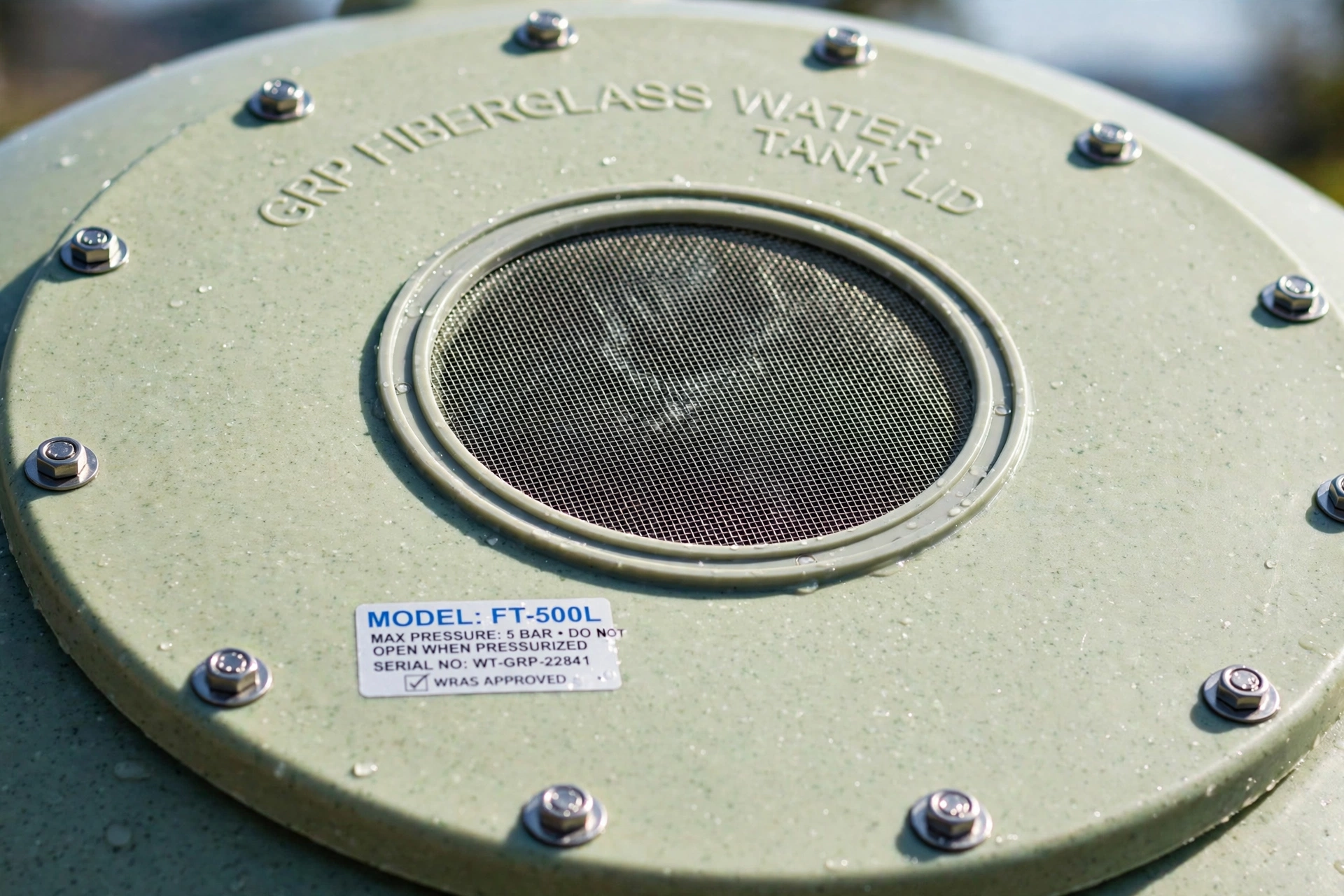
- Lid seal — the lid sits flush and latched, with no gaps for dust, insects, or rain.
- Inlet screen — the mesh is in place and clear of leaves or debris.
- Overflow pipe — it is clear and pointing away from walls and walkways.
- Fittings and valves — no drips, no green or white crust around joints.
- Surrounding area — no standing water, no damp patch under the tank, and nothing stored against it.
If anything on this list fails, fix it the same week. A loose lid or a slow drip is a five-minute job now and a real problem later.
5 Warning Signs Your Tank Needs Attention
Do not wait for the yearly clean if you notice any of these:
- A change in smell or taste — stale, musty, or unusual-smelling water means the tank needs cleaning and disinfecting now.
- Visible sediment or cloudiness — grit in the water or cloudy water after the tap runs clear points to build-up inside.
- Algae growth — green film on the water surface or inner walls, usually where light gets in through a damaged lid or fitting.
- A damp patch or puddle — persistent wetness under or beside the tank can mean a slow leak at a fitting or joint.
- A cracked or brittle fitting — sun-aged plastic fittings eventually weaken. Replace them before they split.
For any of these, clean and inspect first. If a fitting is cracked or a joint keeps leaking after tightening, call a professional rather than forcing it.
Mistakes to Avoid
- Harsh chemicals — strong solvents and undiluted bleach can damage the fiberglass and leave residues. Use only food-safe products made for water tanks.
- Pressure washer at close range — a hard jet can damage seals and the tank surface. A soft brush and rinse water do the job.
- Entering the tank — never climb inside a tank. Cleaning is done from outside, through the access opening.
- Skipping the lid — most contamination enters through a loose or damaged lid. The lid is the cheapest part of the system and the most important seal.
FAQs
How often should I clean a GRP water tank?
Once a year is enough for most UAE villas and buildings, with the five-minute monthly check in between. Clean sooner if you notice smell, taste, sediment, or algae.
Can I use bleach to clean my tank?
Only a food-safe disinfectant made for drinking-water tanks, used exactly as its label directs, followed by a full rinse. Harsh or undiluted chemicals are not safe for the tank or the water.
Do underground GRP tanks need the same routine?
Yes — the same yearly clean and monthly check apply, through the access hatch. Underground tanks stay cooler, but their lids and seals still need checking, and groundwater around the pit should never be allowed to pool against the tank.
When should I call a professional?
Call one for cracked fittings, persistent leaks, electrical work near pumps, or any job that would require entering the tank. Routine cleaning and monthly checks are safe to do yourself.
Does cleaning affect drinking-water safety?
Done properly, cleaning improves it. Always rinse fully after disinfecting, confirm no chemical smell remains, and keep the lid sealed so dust and insects stay out.
Looking for a tank that is easy to live with? Browse the range of GRP fiberglass water tanks and choose the size and shape that fits your property.